Browse any botanical supplement catalogue and you will notice that most herbs come in more than one form — typically a powdered extract and a liquid extract. The difference is not merely cosmetic. Choosing between the two formats affects how the ingredient performs in a formula, how easy it is to use, how it stores, and in some cases how it feels to the person using it.
Emperor Herbs offers many of its Thai botanical extracts in both formats. This guide explains what each form actually is, where each one makes the most sense, and how to think about the choice — whether you are a consumer looking for something to add to your daily routine or a formulator working on a finished supplement product.
Important positioning: Both powder and liquid forms discussed here are herbal supplement ingredients, not medicines. Use and dosage guidance should come from a qualified professional or product labelling.
What is a powdered herbal extract?
A powdered herbal extract starts with a raw botanical material — root, rhizome, bark, or leaf — that is first extracted using water, ethanol, or a combination of solvents to pull the plant’s active compound families into solution. That liquid is then carefully dried and concentrated into a fine powder, with much of the original plant fibre and water removed.
The result is a concentrated, stable solid that can be measured precisely by weight, encapsulated, blended into sachets or functional foods, or dissolved in water before use. The concentration is usually expressed as an extract ratio (such as 10:1, meaning 10 kg of raw herb produces 1 kg of extract) or as a standardised percentage of a specific compound.
Where powdered extract works best
- Capsules and tablets — the most common finished supplement format; powders fill and blend easily
- Functional foods and drinks — can be pre-weighed and mixed into powders, bars, or sachets
- Multi-ingredient blends — easier to combine multiple botanical powders at controlled ratios
- Long shelf life needs — dry powder is more stable over time than liquid when stored correctly in a cool, dry environment
- Precise dosing — weight measurements give consistent, reproducible doses
What is a liquid herbal extract?
A liquid extract skips the drying step. The botanical material is extracted into a liquid medium — typically water, ethanol, or a water-ethanol blend — and concentrated by reducing volume through controlled evaporation. The result is a dense, often viscous liquid that retains the soluble compound families of the plant in a ready-to-use form.
Liquid extracts are typically supplied in small dropper bottles for consumer use, or in larger quantities for formulators adding them to beverages, tinctures, or other liquid-based products. They tend to have a strong, distinctive flavour from the concentrated plant compounds.
Where liquid extract works best
- Direct consumption — can be dropped under the tongue or mixed into water or juice without the need for capsules
- Beverages and functional drinks — dissolves readily into liquid formulations without the clumping risks of some powders
- Faster integration — liquid form moves through the digestive system differently and may be absorbed more quickly by some people
- Tinctures and traditional preparations — aligned with traditional herbal preparation methods that used water or spirit-based extractions
- Cosmetic and topical use — concentrated liquid extracts can be incorporated into cosmetic serums, toners, and skin-care bases
Comparing powder and liquid side by side
| Factor | Powdered Extract | Liquid Extract |
|---|---|---|
| Concentration | Very high (extract ratio or % standardised) | High, but typically lower mg per ml than encapsulated powder per capsule |
| Convenience | Requires capsules or measuring; not instant | Easy to dose directly from a dropper |
| Taste | Neutralised by encapsulation; blends into powders | Strong, often bitter herbal flavour |
| Shelf life | Longer when stored dry and sealed | Shorter; refrigeration recommended after opening |
| Formulation flexibility | Very high — suited to most formats | Best suited to liquids, tinctures, topical use |
| Travel convenience | Capsules travel well | Dropper bottle is portable but less spill-proof |
Examples from the Emperor Herbs catalogue
Several of the most popular Thai botanicals in the Emperor Herbs range are available in both formats, making it straightforward to compare and choose based on how you plan to use them.
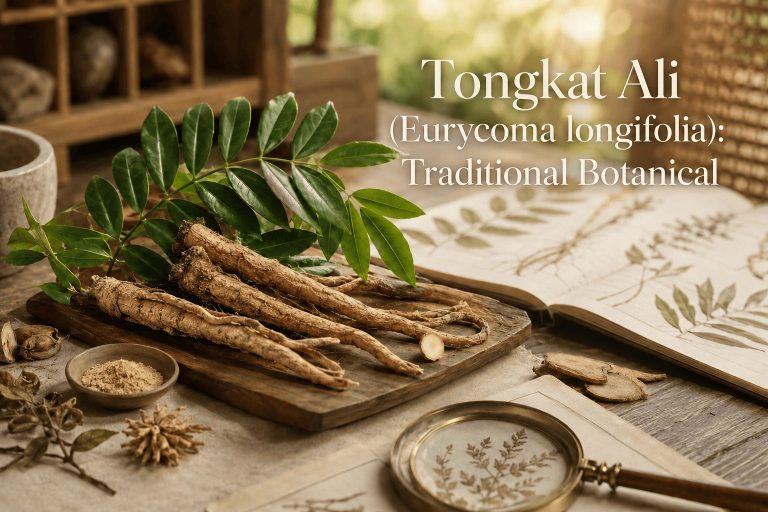
Eurycoma longifolia (Tongkat Ali) — one of Southeast Asia’s most heritage-rich tonic botanicals — illustrates the difference well. The powdered extract is suited to capsule supplementation with a consistent daily dose, while the liquid extract works for anyone who prefers a direct, concentrated drop in water or a functional drink.
Kaempferia parviflora (Black Ginger) follows a similar pattern — a concentrated liquid extract for direct consumption or cosmetic use, alongside a powder for encapsulation and blending.
Which should you choose?
For most everyday supplement users, the powder form in capsules is the most practical starting point: the dose is consistent, the taste is not a factor, and capsules integrate easily into a daily supplement routine. If you prefer to avoid capsules entirely, or want to add a botanical extract directly to a drink, tea, or smoothie, the liquid form is the more flexible option.
For formulators, the choice depends on the finished product format. Capsule and tablet production almost always calls for powder. Liquid formulations — functional beverages, tinctures, cosmetic bases — are better served by liquid extracts that dissolve without processing challenges.
In some cases, using both forms in the same product range allows you to serve two consumer segments with the same botanical ingredient: those who prefer capsule convenience, and those who want a more direct, traditional liquid-drop experience.
The takeaway
Powder and liquid herbal extracts are both concentrated, quality-driven forms of the same botanical starting material — the choice between them comes down to how you use them, not which one is categorically “better.” Understanding the practical differences makes it easier to choose the right format for your needs and build a consistent, effective supplement or cosmetic routine around Thai botanical extracts.
Disclaimer: This article is for general educational and informational purposes only. It is not medical advice and does not claim to diagnose, treat, cure, or prevent any disease or health condition. Emperor Herbs botanical extracts are supplied as herbal supplement ingredients. Dosage and suitability depend on individual circumstances — consult a qualified healthcare professional before use.