Eurycoma longifolia — known throughout Southeast Asia as Tongkat Ali, Pasak Bumi, or Long Jack — is one of the region’s most enduring heritage botanicals. Slender jungle trees growing across the lowland forests of Malaysia, Thailand, and Indonesia, their roots have been collected and prepared as tonic beverages for generations. Today, Eurycoma longifolia has moved well beyond its traditional home, becoming one of the most recognised botanical extracts in the global wellness and sports-nutrition market.
This profile looks at the plant itself, its long traditional history, the compound families that have attracted modern interest, and how it is supplied as a botanical extract today. All content here addresses Eurycoma longifolia as a herbal supplement ingredient, not as a medical product.
Important positioning: Eurycoma longifolia is discussed here as a botanical and herbal supplement ingredient. The content below covers traditional heritage and natural compound profile. None of it constitutes a medical claim, and this extract is not a treatment for any health condition.
What is Tongkat Ali?
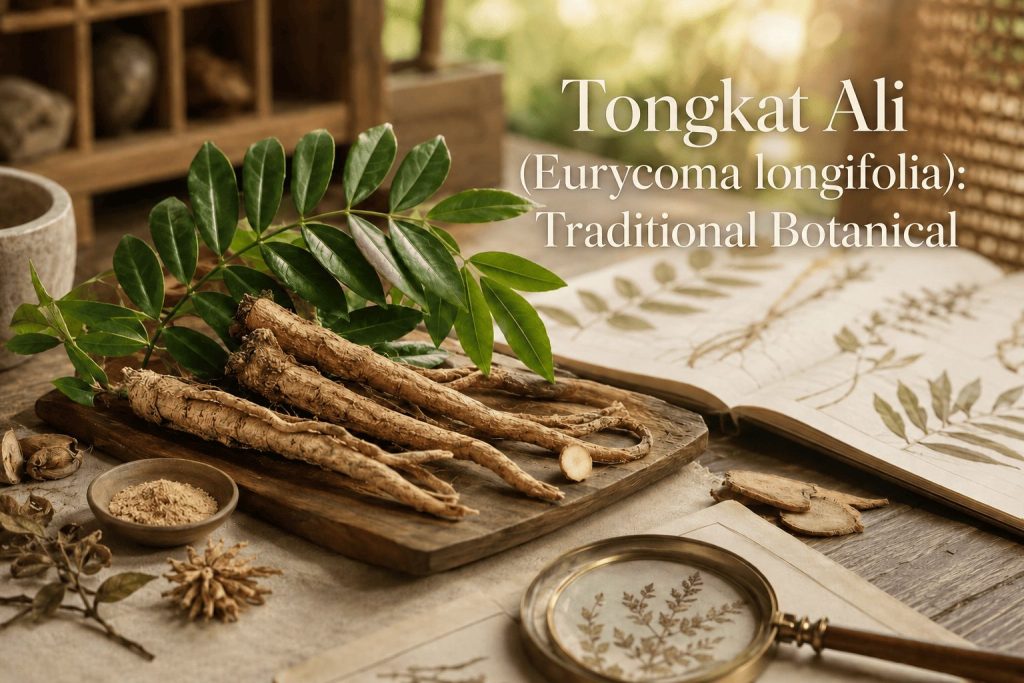
Eurycoma longifolia is a flowering plant in the Simaroubaceae family, native to the tropical forests of Southeast Asia. It grows as a slender, single-stemmed tree, typically reaching three to fifteen metres in height, with long pinnate leaves and small reddish fruit. It thrives in sandy, acidic soils beneath the jungle canopy.
The part of the plant used in traditional preparations — and in modern botanical extracts — is primarily the root, which contains the highest concentration of bioactive compounds. Because the tree grows slowly and the root must be mature before harvest, sustainable and responsible sourcing is an important consideration for anyone working with this ingredient.
A heritage of Southeast Asian folk tradition
Across Malaysia, Indonesia, Thailand, and the Philippines, Eurycoma longifolia has a long history as a tonic herb. Traditional preparations varied by region: the root was often boiled into a decoction and consumed as a bitter tea, or the dried root was added to traditional herbal formulas intended to support everyday vigour and stamina.
The name Tongkat Ali roughly translates from Malay as “Ali’s walking stick” — a reference both to the plant’s upright, slender form and to the cultural association with physical strength and resilience that the botanical has carried for generations. In Thai folk tradition, the plant is known as Plao Noi and holds a comparable place as a tonic botanical for energy and vitality.
This depth of traditional use is part of what gives the ingredient credibility in the global supplement market, particularly as consumer interest in botanical heritage, traditional Asian medicine, and non-synthetic wellness options continues to grow.
The compound profile behind the interest
What distinguishes Eurycoma longifolia from more common botanicals is its unique group of bitter-tasting compounds called quassinoids, along with alkaloids, flavonoids, and antioxidant phytonutrients. This combination is relatively rare in the plant world and is specific to the Simaroubaceae family.
Quassinoids and alkaloids
Quassinoids are the most studied compound family in Eurycoma longifolia. These highly oxygenated terpenoid compounds are responsible for the root’s characteristic bitterness and have been the subject of growing academic interest. Alongside the quassinoids, various alkaloids — including beta-carboline and canthin-6-one types — contribute to the plant’s complex chemical identity.
Antioxidant and phenolic compounds
Like many traditional tonic botanicals, Eurycoma longifolia also contains phenolic antioxidant compounds. These are broadly relevant to modern formulation in the context of everyday oxidative stress management and general wellness support — the kind of positioning that suits a botanical supplement without entering medical-claim territory.
Tongkat Ali in modern supplement formulation
The global supplement market has embraced Eurycoma longifolia primarily in the men’s health, sports nutrition, and healthy-ageing categories. Formulators typically position it around energy support, physical stamina, and vitality — areas that align naturally with the botanical’s traditional reputation and do not require disease-treatment claims.
A high-quality extract standardised to a consistent compound profile is important for anyone building a formula around this ingredient. Emperor Herbs offers Eurycoma longifolia as a powdered extract, providing a concentrated and consistent form suitable for capsules, blends, and other finished supplement formats.
Powder and liquid: two extract formats
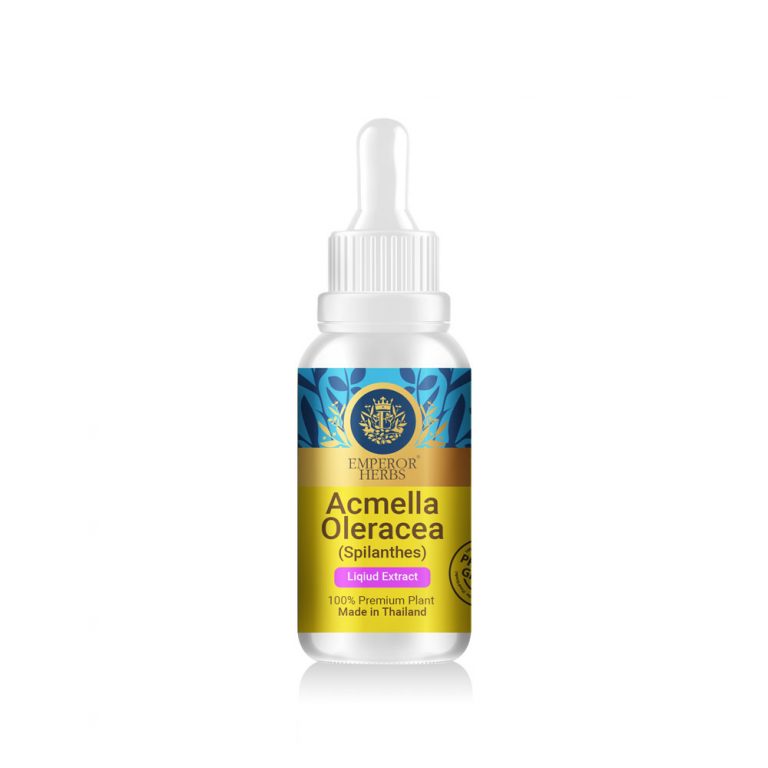
Emperor Herbs supplies Eurycoma longifolia in both powder and liquid extract formats. The two forms serve different needs and fit different formulation and consumer use cases.
The powdered extract is the more versatile format for supplement production: it measures easily, blends well, has a stable shelf life, and is standard for capsule, sachet, and functional-food applications. The liquid extract is more convenient for direct consumption or for blending into drinks and functional beverages, where dissolution and ease of use matter.
Sourcing and quality considerations
Given the slow growth of the tree and the demand pressure from global markets, responsible sourcing is a real concern with Eurycoma longifolia. In Thailand, the plant is found mainly in southern forested regions, and wild-harvesting practices vary in quality. Working with a supplier that can verify origin, harvesting practice, and extraction standards matters for both product integrity and long-term supply security.
Quality markers to look for include a specified water-soluble extract ratio, a defined quassinoid or alkaloid profile, and clean heavy-metal and microbiological testing results — all of which should be available from a reputable extract supplier.
The takeaway
Eurycoma longifolia earns its place as one of Southeast Asia’s most compelling heritage botanicals: a long tradition of tonic use, a scientifically interesting compound profile, and a clear position in the modern supplement market around energy, vitality, and healthy ageing. Framed honestly as an herbal supplement ingredient with a meaningful traditional heritage, it remains one of the most relevant Thai botanicals for consumer health formulation today.
Disclaimer: This article is for general educational and informational purposes only. It is not medical advice and does not claim to diagnose, treat, cure, or prevent any disease or health condition. Emperor Herbs botanical extracts are supplied as herbal supplement ingredients. Consult a qualified healthcare professional before use, particularly if you have an existing health condition or take medication.