
Kaempferia parviflora — known across Thailand as Black Ginger or Krachai Dam — is one of the kingdom’s most storied wellness botanicals. Its deep purple-fleshed rhizome has been part of Thai folk tradition for well over a century, and modern formulators are revisiting it for its rich profile of methoxyflavones and antioxidant compounds.
This profile makes Black Ginger an interesting subject for anyone exploring traditional Southeast Asian botanicals and how heritage ingredients are positioned in today’s wellness and cosmetic formulations. Below is a grounded look at the plant, its heritage, and where it fits in a modern botanical extract catalogue.
Important positioning: Kaempferia parviflora is discussed here as a botanical and cosmetic extract ingredient, not as a medicine. The content below covers traditional context and the plant’s natural compound profile — it is not a treatment claim.
What is Black Ginger?
Kaempferia parviflora is a herbaceous plant in the Zingiberaceae — the ginger family — making it a close botanical relative of common ginger and Curcuma longa (turmeric). It is distinguished by the dark, almost black-violet colour of its rhizome, which is the source of its Thai name Krachai Dam, meaning “black krachai”.
The plant grows in the cooler, upland regions of northern and northeastern Thailand. The rhizome is harvested, sliced, and dried before extraction, concentrating the flavonoid compounds that give the botanical its characteristic profile.
A heritage of Thai folk wellness
For generations, Black Ginger has held a place in Thai folk tradition as a tonic herb — valued by communities for supporting everyday energy, stamina, and a general sense of vitality. It was traditionally prepared as a tea, infused in rice spirit as a tincture, or simply added to food.
This long-standing reputation is part of why the botanical remains culturally significant today. As interest in traditional Asian botanicals grows worldwide, Kaempferia parviflora has moved from a regional folk ingredient to a recognised name in the broader botanical-wellness conversation.
The flavonoid profile behind the interest
What makes Black Ginger scientifically interesting is its concentration of methoxyflavones — a group of polyphenolic antioxidant compounds that are relatively uncommon in the plant world.
Antioxidant support
Like its relatives ginger and turmeric, Kaempferia parviflora carries antioxidant compounds studied for their role in helping the body manage oxidative stress from everyday environmental exposure. Antioxidant-rich botanicals are a recurring theme in modern wellness formulation.
A traditional vitality botanical
Within Thai heritage, Black Ginger is most associated with the idea of vitality and physical resilience. Modern brands generally frame this through a structure-and-function lens — supporting normal energy and an active lifestyle — rather than as any medical effect.
Black Ginger in modern formulation
Emperor Herbs offers Kaempferia parviflora as a high-concentration liquid extract, designed as a cosmetic-grade raw material for formulators building botanical serums and topical wellness products. Concentrated liquid form makes it straightforward to blend into a finished formulation at a controlled inclusion rate.
Related Thai vitality botanicals
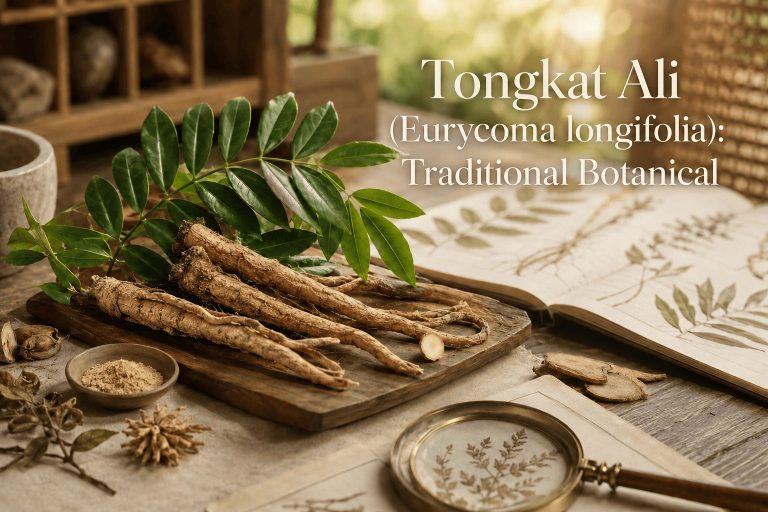
Black Ginger sits within a wider family of Thai botanicals traditionally associated with men’s vitality and stamina. Two that pair naturally with it in formulation discussions are Anaxagorea luzonensis and Eurycoma longifolia, better known as Tongkat Ali.
The takeaway
Kaempferia parviflora connects more than a century of Thai folk heritage with a modern, antioxidant-driven approach to botanical formulation. Framed honestly — as a heritage extract with a distinctive flavonoid profile rather than a medical product — it remains one of the most compelling botanicals in the Thai catalogue.
Disclaimer: This article is for general educational and marketing purposes only. It is not medical advice and does not claim to diagnose, treat, cure, or prevent any disease. Emperor Herbs botanical extracts are supplied as ingredients; product suitability depends on formulation, concentration, and intended use. Consult a qualified professional before use.